
Trauma-Sensitive Schooling
The Building Healthy Communities program wants to ensure that every teacher, administrator, and school staff member has access to professional development to learn more about the impacts of trauma and resources to foster a trauma-sensitive school environment. To do this, we’ve provided resources from the Trauma and Learning Policy Initiative’s (TLPI), created through a partnership between Massachusetts Advocates for Children and Harvard Law School. The TLPI’s Flexible Framework, is the industry standard in creating trauma-sensitive environments structured to help all children learn. We’ve also compiled many resources here that provide the tools and support to implement the best practices outlined by the TLPI.
Do you want more training or professional development for your staff related to trauma-sensitive schooling? Contact your BHC Coordinator and we can assess how we can best support your school’s efforts.
Trauma Sensitive Schools Professional Development Video Series
Part 1: Academic Performance (9:27):
Part 2: Classroom Behavior (4:26):
Part 3: Relationships (3:12):
Trauma Sensitivity (10:01):
Becoming a Trauma-Sensitive School, How We Get There (9:53):
Five Core Ideas of Helping Traumatized Children Learn (3:16):
Resources for Fostering a Trauma Sensitive School Environment
Making trauma sensitivity a regular part of how our state’s schools operate requires many different stakeholders, like teachers, parents, administrators, and behavioral health providers, working, learning, and advocating together. As part of the TLPI’s Framework, there are six elements of a school’s infrastructure that play a critical role in either supporting or inhibiting their efforts to become trauma-sensitive: leadership, professional development, access to resources and services, academic and nonacademic strategies, policies and protocols, and collaboration with families. We’ve provided resources and tools aligned with this framework below; if there are areas where you’d like to do more in your school building, let us know and we can facilitate additional training and implementation materials for your staff.
SEL Resources



HTCL-Vol-2-Creating-and-Advocating-for-TSS
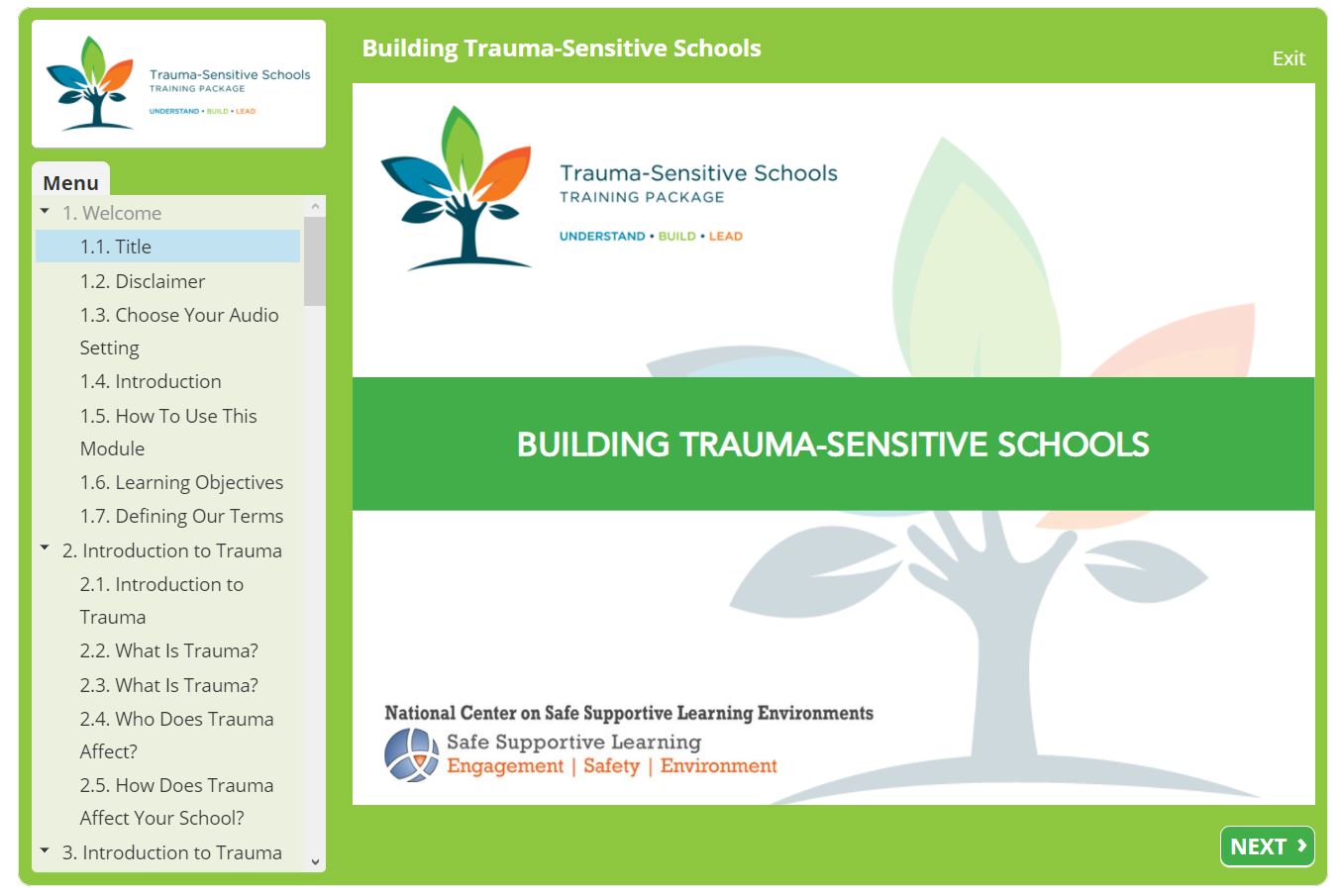
School leaders must play a key role creating an infrastructure and culture that promotes trauma sensitivity. The Trauma-Sensitive Schools Training Package from the National Center on Safe Supportive Learning Environments offers school and district administrators and staff a roadmap for adopting a school- or districtwide approach to addressing trauma and promoting resilience for everyone in the learning environment. This training package supports school and district administrators and staff to do the following:
- Understand trauma in a broad and inclusive way;
- Recognize the effects of trauma on students, families, school administrators, and staff, and communities;
- Learn a process for implementing a schoolwide trauma-sensitive approach
- Integrate trauma-sensitive practices into their daily operations.
TSS_Building_Handout_Packet_ALL
TSS_Building_Facilitation_Guide_0
Professional development is critical for all school staff, including district and building-level leaders. When educators are provided with opportunities to build trauma-sensitive skills and encouraged to integrate trauma sensitivity practices into their pedagogy, healthier school communities result. Professional development can look different depending on the unique context of your building, but you may want to include topics such as: understanding the prevalence and impact of trauma; techniques for strengthening relationships between children and adults; and alternatives to punitive disciplinary practices.
Building Trauma-Sensitive Schools



In the classroom, it is important for educators to utilize strategies to help ensure the classroom is a place where children feel physically and psychologically safe. Often, simple practices, like clear, explicit communication and routines that provide predictability help children learn more effectively. The resources provided here help to encourage educators to consider individual children holistically – including their relationships with adults and peers, their self-regulation of emotion, attention, and behavior, and their physical and psychological well-being.
Eric Jensen, author of Teaching with Poverty in Mind, stated, “the brain that is susceptible to adverse environmental effects is equally susceptible to positive, enriching effects.” The following resources can help teachers utilize trauma-informed strategies to foster classroom environments that ensure children feel safe, valued, calm, and prepared to learn.
Learn More About Trauma-Sensitive Strategies:
Resources to Use In Your Classroom:


Yoga and mindfulness in the classroom can help foster a trauma-sensitive environment, try:
In order to ensure a whole school trauma-sensitive environment, educators must review the policies and protocols that are responsible for the day-to-day activities and logistics of the school. Some examples of policies that schools often review as they become trauma-sensitive include: discipline policies; communication procedures; and safety planning.